Key Takeaways
- A tank water heater stores hot water. A tankless unit heats water as it flows through.
- Neither one is always better. The right pick depends on how much hot water you use at once and what your home can support.
- Tankless is not always cheaper to run, and switching can mean new gas, vent, or electrical work.
- Ask for an on-site look before you buy any equipment.
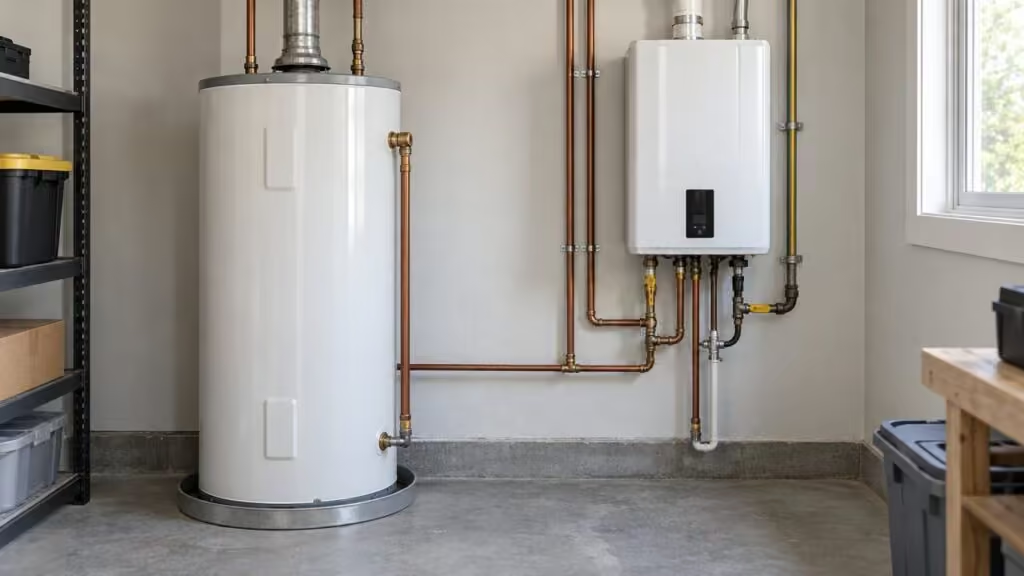
A tank water heater heats water and holds it until a faucet or appliance needs it. A tankless water heater heats water as it flows through the unit. Both can serve a home well, but neither one is always the better buy. The best choice depends on how much hot water you need at once, your gas and electrical setup, the install work involved, the upkeep you expect, and how long you plan to stay in the home.
For homeowners in Cookeville and the Upper Cumberland, the first question is whether a certain model can keep up with your home’s real demand without costly changes to the house. Being sold as “endless hot water” doesn’t answer that. An experienced plumber should size any new heater for the home and the people using it, instead of just copying the size of the old one.
How a Storage Tank Water Heater Works
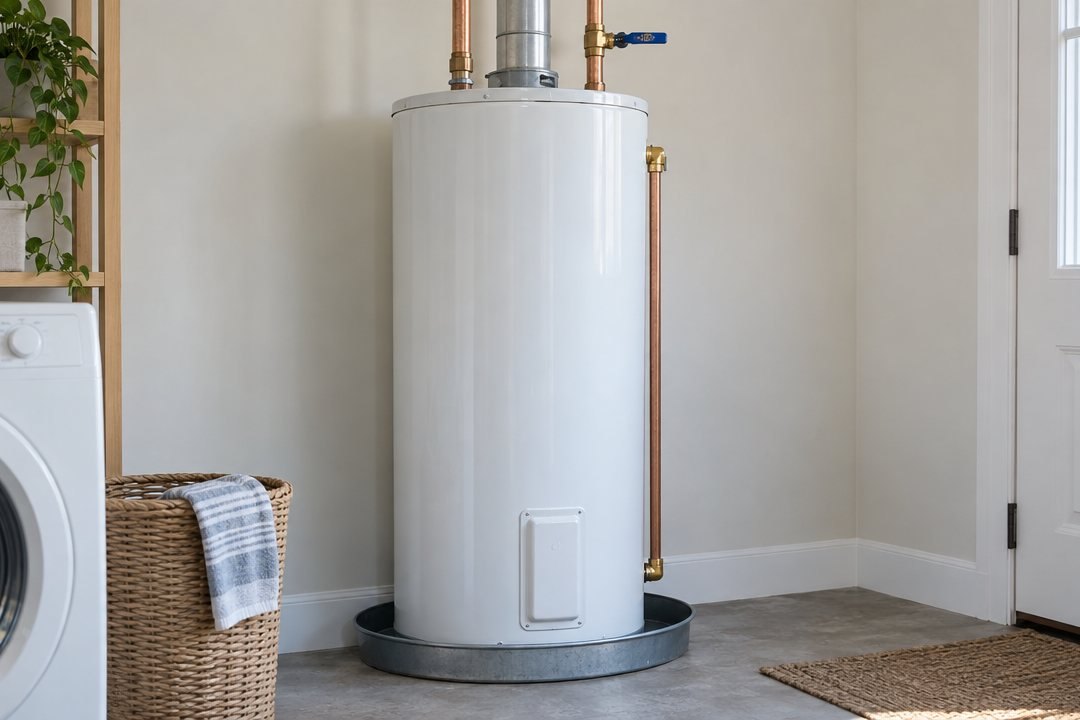
A standard tank heater keeps a set amount of water hot in an insulated tank. When someone showers or runs the dishwasher, hot water leaves the tank and cold water comes in to be heated. How much hot water you really get depends on the tank size, how fast it reheats, the temperature setting, and how the water mixes at the fixture. A tank can handle a big burst of use, but one that is too small may run out during back-to-back showers.
Tank heaters are familiar, and they are often simple to replace when the fuel type and location stay the same. They come in standard electric, gas, and heat pump versions, and those are not the same thing. A heat pump water heater is usually a tank-style unit that heats water in a different way, and it often uses less energy than a standard electric tank. Keep that in mind when you compare energy use.
The main tradeoff is standby energy use. A tank has to keep its water hot between uses, though insulation and good controls cut that loss. What that costs you depends on the heater, where it sits, your water temperature, and how you use hot water. You can’t tell how efficient a tank is by looking at it, so check its rating.
How a Tankless Water Heater Works
A tankless heater senses water flowing through it and makes heat for as long as the water runs. It does not keep a large supply hot. Whole-home units can run on gas or electricity, and small point-of-use units heat water right near the sink or shower. A gas unit may need a large burner, the right gas supply, fresh air for burning, and a sealed vent. Some condensing models also need a drain. A whole-home electric unit can need more electrical capacity than your home has to spare.
Makers list limits for the temperature of the water coming in, how much the unit can raise that temperature, and how much water it can deliver at that rise. In colder months, the water coming in may be cooler, so the same unit may deliver less hot water per minute. The flow sensor also needs a certain amount of water moving before it turns on. These limits vary by product, and they are normal for this kind of heater.
“Endless” tells you how long the hot water can last, and it says nothing about how much can flow at once. A unit sized well can keep a long shower hot. It may not hold that temperature if several fixtures run at once and together they ask for more than its rating.
The Comparison That Matters at Home
| Decision factor | Conventional storage tank | Tankless unit |
|---|---|---|
| Hot-water delivery | Stored water plus recovery; limited when the stored supply is depleted | Continuous heating while running; limited by rated flow and temperature rise |
| Multiple simultaneous uses | A sufficiently sized tank can cover short peaks; recovery matters afterward | Must be sized for the combined flow of fixtures used together |
| Space | Requires room for tank and safe access | Often has a smaller wall-mounted footprint, but still needs clearance and approved venting/utilities |
| Initial installation | May be relatively simple if replacing like-for-like | Conversion may require gas, electrical, vent, condensate, or piping changes |
| Energy performance | Depends on the type of heater and its efficiency rating; heat pump tanks are a separate high-efficiency option | Avoids a tank’s standby losses; actual savings depend on the product, fuel, and how you use it |
| Maintenance | Inspection, flushing, and other service for that model | The water filter may need cleaning and the heat exchanger may need descaling; follow the maker’s schedule |
This table shows common differences. It does not promise that every product in one group beats every product in the other. Compare the real numbers for each model before you decide.
Which Handles Several Showers or Appliances Best?
First, figure out which uses really overlap. One bathroom with some laundry is very different from two showers and kitchen cleanup every morning. Write down your busiest real routine, like a shower plus the dishwasher, two showers plus laundry, or several showers in a row.
For a tank heater, ask about its first-hour rating and how fast it reheats. The first-hour rating shows how much hot water the unit can supply in a busy hour under set test conditions. The gallon number on the label doesn’t tell the whole story.
For tankless, ask for the rated gallons per minute at the temperature rise your area needs. Add up the flow of the fixtures you use at the same time. Don’t assume the top advertised flow will be there in winter. A large gas model may serve several fixtures, while a small electric unit made for one spot will not. If your home uses a lot of hot water at once, you may need a larger unit or a different setup.
There is also a comfort difference. A tankless heater can’t send hot water to far-off taps right away, because the cold water sitting in the pipe has to run out first. Some homes add a recirculation system or a small heater near the tap. Weigh the install, energy, and upkeep of those add-ons before you treat them as upgrades.
Is Tankless Always Cheaper to Run?
No. Skipping a tank’s standby loss can help efficiency, but a lower monthly bill is not a sure thing. The answer depends on fuel prices, the model’s Uniform Energy Factor (UEF), how much hot water you use each day, whether your uses are short or long, how the unit is installed, and upkeep. An efficient heat pump tank also changes the math if you would otherwise choose a standard electric tank or an electric tankless unit.
Compare heaters in a fair way. Identify the fuel, look at like-for-like efficiency numbers, estimate how much hot water you use, and ask the contractor to list any changes to gas, electric, or venting. Don’t compare a basic old gas tank to a premium new tankless unit and assume that gap applies to every tank. Also be wary of savings estimates that leave out electricity, gas, service, or install costs.
It helps to look at the total cost. Include the equipment, labor, any changes to the home, permits or inspections if needed, future service, energy costs, and when you will likely need to replace it. An efficient heater can be a good long-term buy. But if the switch takes a lot of work, it may not pay for itself while you own the home.
Installation Requirements Can Change the Decision
Replacing a water heater is a plumbing job, and depending on the unit, it can also be a gas or electrical job. The space around the heater needs enough room for access and the required clearances. Gas units have vent and air needs that differ from model to model. Some condensing units need a drain. Electric tankless units can put a heavy load on your electrical service and may need a load calculation and upgrades.
Older Tennessee homes can have limits you won’t see in an online listing, like a tight utility room, an old vent layout, a full electrical panel, long hot water pipe runs, or past changes no one wrote down. Ask for an on-site look before you buy equipment on your own. A lower-priced unit that can’t be installed safely in your space is no bargain.
An install check should also look at the water supply, the shutoff valves, the temperature controls, and whether the system meets local requirements. Have the installer explain how the unit will be serviced later. A compact wall unit placed where no one can reach the valves or covers can make future work harder.
Maintenance, Lifespan, and Repair Expectations
Every water heater needs attention. EPA WaterSense recommends looking your heater over regularly for leaks and corrosion and having a pro service it at least once a year. The exact tasks should follow the owner’s manual and your home’s conditions. Tank heaters may need sediment flushed and care for parts like the anode rod or the temperature and pressure relief valve. Tankless units may need the inlet filter cleaned and minerals removed from the heat exchanger. No matter which type you have, never open gas parts or bypass a safety device to do upkeep.
Water quality matters. Mineral scale can hurt performance, mostly where the water gets heated. A pro can look at treatment options if your water and equipment call for it. Don’t assume every unit needs descaling on the same schedule, or that one flushing method is safe for all models.
Some brochures promise a longer life for tankless units. Use those numbers for planning, and don’t count on them. Service history, water quality, daily use, parts, and repairs all affect when you will need to replace a heater. Ask about warranty coverage for the heat exchanger or tank, what labor it leaves out, what upkeep you have to document, and whether parts are available locally.
Which Households May Prefer Each Option?
A standard tank often suits homeowners who want familiar, predictable performance, have enough space, and can replace like with like without big gas, vent, or electrical changes. Sized right, it can also handle short bursts of heavy use. A heat pump tank is worth a separate look for some homes with the right space and electrical setup.
A tankless unit may appeal if you want to save space, avoid keeping a big tank hot, and expect long uses that stay within the unit’s rated flow. It can make sense when your home is already set up for it or when a bigger remodel lets the system be designed right. It is a harder case when switching takes major utility work or when several high-flow fixtures run at once.
For a family with two showers running each morning, the right question is, “What is the combined flow at the temperature rise we need?” For a couple with one bathroom, the question may be whether the energy and space benefits are worth the cost to switch. For a large household replacing an electric tank, a heat pump tank deserves an equal look. Comparing your real use and real specs helps more than naming one winner.
Questions to Ask Before Approving a Replacement
Ask the installer to write down your current fuel type, your home’s peak hot water demand, the size they recommend, how the unit will perform in winter, and any changes to utility connections. Ask for an itemized list of any vent, drain, electrical, or gas work. Also ask what yearly upkeep it needs, who can safely do it, how the warranty works, and how easy it will be to reach the unit for service.
If energy savings are part of the pitch, ask what they are based on. Hearing that a model is “more efficient” is not the same as a real estimate of your yearly costs. Make sure each quote covers the same work and the same class of equipment.
A Practical Decision, Not a Universal Winner
The right water heater is the one that reliably meets your home’s demand and fits its setup, the upkeep you can keep up with, and your budget. Before you replace a working heater or commit to a switch, gather the equipment details and ask for an on-site look. For more on caring for your home’s plumbing, see our homeowner’s guide to plumbing problems, maintenance, and repairs.
Putnam Maintenance installs and services water heaters, including tankless units. Schedule service online or call (931) 559-7823.