Key Takeaways
- Repeated breaker trips, warm or discolored outlets, buzzing, shocks, and burning odors are reasons to have a qualified electrician evaluate the problem.
- Don’t keep resetting a breaker that trips, and don’t install a higher-rated breaker without a wiring evaluation, because that can remove essential protection.
- Before adding major appliances or starting a renovation, have capacity and circuits evaluated, since an older home doesn’t always need a new panel.
- Never connect a portable generator to a household outlet, and operate portable generators outdoors, well away from your home’s openings.
Your home’s electrical system should just work, quietly, day after day. Lights turn on and appliances run. Your heating and cooling start, and outlets power the things you use every day. Since it all feels so normal, it’s easy to shrug off a flicker now and then. It’s just as easy to ignore a breaker that trips more than once.
Some electrical problems are fairly simple. Others are signs of trouble that can lead to shock, damaged equipment, or fire. You don’t have to find the exact fault to do the right thing. Here are the most important first steps. Spot the warning signs. Limit use of anything that’s acting up. Bring in a qualified electrician when it’s needed.
A useful rule: some signs mean it’s time to stop treating the problem as a small hassle. Watch for breakers that keep tripping, warm or discolored outlets, buzzing or crackling, shocks, and burning smells. When you see them, have a qualified electrician check it. Don’t open the panel, take out a device, or try live-wire tests to look into these signs.
The Main Parts of a Home’s Electrical System
Power comes into your home from the utility line or another approved supply. From there, it moves through the service equipment, panel, breakers, circuits, wiring, outlets, and switches. That’s how it gets to your lights and appliances. Homes are set up in different ways. How old the system is also shapes which parts and safety devices you may have.
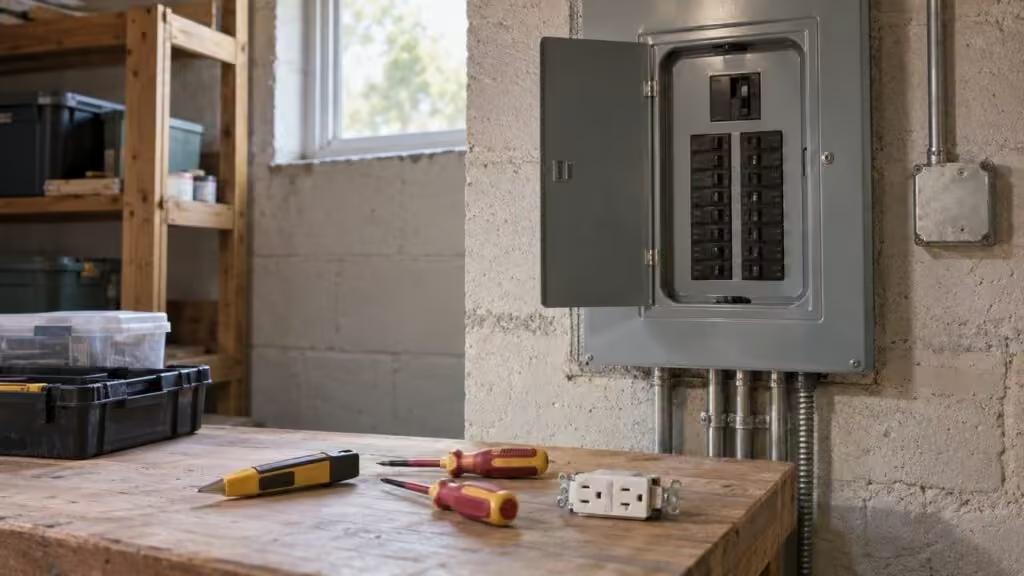
The electrical panel and breakers
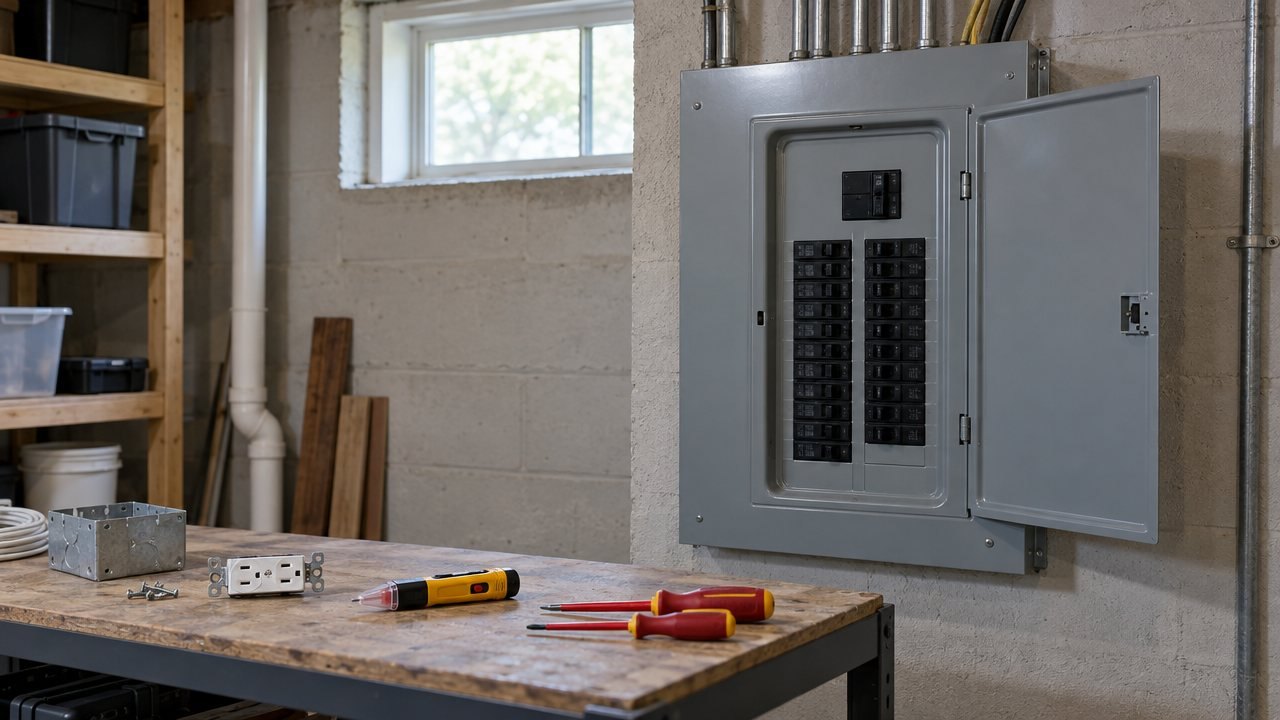
The panel is where your home’s circuits get their power. Breakers are made to shut off a circuit in certain cases when too much current flows. They are key safety parts. But they don’t take the place of correct wiring, the right size circuits, or special shock protection.
One breaker may power outlets in several rooms. Another may serve just one appliance. Clear labels on the panel help you and a qualified electrician talk about which area has the problem. But labels alone don’t prove what’s on a circuit. Past changes may not have been written down.
A breaker that keeps tripping is a sign of a problem. It’s not a sign you need a bigger breaker. Swapping in a higher-rated breaker without checking the wiring can take away key protection. A licensed electrician should find the cause and the right fix.
Branch circuits, outlets, and switches
Branch circuits carry power from the panel to your lights, outlets, and anything wired in. Each one can only handle so much. Its limit depends on the circuit’s design, the size of its wires, its safety devices, and the load on it.
A power strip gives you more places to plug in. It does not add power to the circuit. That matters when you plug several appliances that make heat, space heaters, or other big loads into one outlet area. Electrical Safety Foundation International (ESFI) says to avoid overloading circuits. It also says to rely on qualified electricians to add circuits where needed.
Safety devices with different jobs
Each of these safety devices guards against a different risk:
- Circuit breakers shut off a circuit in certain cases when too much current flows.
- Ground-fault circuit interrupters (GFCIs) are meant to lower the risk of shock from ground faults. This matters most in spots where codes call for them.
- Arc-fault circuit interrupters (AFCIs) are made to catch some kinds of unsafe arcing.
- Surge protective devices help handle short spikes in voltage. How well they work depends on how they’re built and put in.
- Smoke and carbon monoxide alarms warn you about dangers. But they don’t take the place of electrical upkeep or safe fuel-burning appliances.
What your home needs depends on its wiring, past remodels, and the codes that apply today. Is any protection missing, aging, or used the wrong way? Having an electrician check is the right way to find out.
Electrical Warning Signs Homeowners Should Not Ignore
The same symptom can have more than one cause. That is why the goal is to recognize a pattern and report it accurately, not diagnose it by guessing.
A breaker trips repeatedly
One trip after an unusual load doesn’t prove there’s a specific fault. But a breaker that trips again should be looked into. That’s even more true if it trips during normal use or when one appliance starts. The cause could be an overloaded circuit, a bad appliance, or a wiring problem.
Don’t keep resetting a breaker just to keep something running. Stop using that circuit. Ask a qualified electrician to find out why the breaker keeps shutting off.
Lights flicker, dim, or brighten unexpectedly
One loose bulb acts differently than lights flickering all over the house. Pay closer attention when the flicker hits several rooms. The same goes when it happens as big equipment starts up, or along with buzzing or overheating. Problems on the utility’s side can also affect your power. So an electrician may suggest bringing in the power company as part of the check.
Notice if the problem is at one light or across many circuits. Those details help. Opening fixtures or poking at wiring does not.
Outlets or switches feel warm, buzz, or show discoloration
Strange warmth, stains, crackling, or a burning smell around an outlet, switch, or other device can mean overheating or a bad connection. Stop using that outlet or switch. Keep people away from it and call a qualified electrician right away. If there is smoke, fire, active sparking, or any danger right now, follow emergency instructions. Don’t wait for a regular service visit.
Someone feels a shock or tingling sensation
Even a mild shock from a device, outlet, switch, or appliance deserves respect. Do not keep touching the equipment to see whether the sensation happens again. Stop using it and have the condition assessed. Water or damp areas near electrical equipment increase the risk.
An older electrical system is being asked to support new demands
Big appliances, shop tools, EV charging, a kitchen remodel, or a new heating and cooling system can change how much power your home needs. That doesn’t mean every older house needs a new panel. It does mean you should have your home’s power limits, circuit layout, and safety devices checked before you add big new loads.
Electrical Panel Upgrades: When Are They Worth Considering?
A new panel isn’t about looks. It’s a project that needs a real reason. That reason should be safety, the shape the equipment is in, or a proven need to change how much power you have or how circuits are laid out.
An electrician may want to take a closer look for a few reasons. These include faults that keep coming back, signs of overheating, worn-out parts, or equipment that’s outdated or causing problems. Plans that add more electrical load are another reason. Sometimes the right fix is a dedicated circuit or a repair somewhere else, not a new service panel.
Ask what has been confirmed so far. Is the panel damaged? After a proper load calculation, is the service too small? Are there code or permit issues? Will the utility need to plan a power shutoff? The proposal should make these details clear.
The size number printed on a breaker or panel doesn’t tell you how much your house can safely handle. Don’t use it to judge that yourself. Figuring the load, matching parts, sizing wires, and meeting local rules are jobs for an electrician.
Planning a new circuit or major appliance
Before you add a new load, find the maker’s power specs for the appliance. Tell the electrician what else is already installed. They can tell you if you need a dedicated circuit, changes to protection, wiring work, or other upgrades.
It’s also worth talking about what you’ll need later. If you plan to add an EV charger, a heat pump, or a shop, one plan may work better than separate projects. But future plans aren’t a reason to oversize or replace things you don’t need. The work should still fit what your home really needs.
Everyday Electrical Safety Practices
The best habits are about watching and preventing problems. None of them mean touching live wires.
- Keep cords in good condition. Replace damaged products rather than covering frayed areas with tape.
- Do not run cords under rugs, through doorways, or in locations where they are pinched or damaged.
- Don’t use extension cords as permanent wiring. If you always need more outlets, talk with an electrician about adding circuits or outlets.
- Plug big appliances that make heat into the right outlets, as the maker directs. Don’t assume a power strip lets the circuit handle more.
- Keep the area around your panel clear and dry. That way, a qualified pro can check it or respond fast.
- Know where your panel is. Keep circuit labels clear and correct when you can confirm them safely.
- Test alarms and other safety devices you’re meant to test, following their instructions. Get qualified help if they fail or act strange.
- Think about having an electrician check your home when you remodel, buy an older home, or keep seeing warning signs.
ESFI’s home safety advice points to warning signs like tripped breakers, flickering lights, buzzing, discolored devices, and strange warmth. Not seeing those signs doesn’t prove every hidden connection is safe. That’s even more true after changes made without a permit.

Surge Protection and Backup Power
Power surges can come from many places, not just lightning. Equipment turning on and off and problems on the utility lines can make voltage jump all at once. Surge protection is one part of keeping your electronics and home systems safe. But no device can promise to stop every surge or a direct lightning strike.
A licensed electrician can explain where a whole-home surge protective device might fit. They can also tell you if plug-in protection still makes sense for some devices. Any equipment should be chosen and installed based on its ratings and current standards.
Backup power brings its own set of choices. Standby generators, portable generators, and battery systems differ a lot in power, setup, fuel needs, and hazards. Hooking a generator to your home’s wiring must be done with the right equipment, put in by a pro. Never connect a portable generator to a household outlet to power the building. This dangerous practice can send power back into the lines. That puts both the people inside and utility workers in danger.
Fuel-burning generators make carbon monoxide. Portable generators must be run outdoors and well away from doors, windows, and other openings. Follow the maker’s instructions and public safety guidance. The best setup is planned around what your home truly needs to keep running and what the equipment can handle.
Smart Home Devices: Useful, but Not All Plug-and-Play
Thermostats, light controls, home monitors, and smart switches can make some tasks easier. But they aren’t all put in the same way. A plug-in sensor is not the same job as replacing a wired switch or hooking up a new dedicated circuit.
Before you buy an in-wall device, check with the maker that it will work in your home. Ask if it needs a neutral wire, a certain wiring setup, a hub, or electrical work. Changes to line-voltage wiring should be done by qualified pros. Always make sure a device works with what you already have. Don’t assume a smart-home label means it will work with your setup.
What Happens During a Professional Electrical Service Visit?
A careful service visit starts with details. The electrician may ask what the equipment was doing when the problem started. They may ask if it affects one room or several, and if a repair or new appliance came right before it. Depending on the job, finding the problem may mean testing circuits one at a time, checking equipment, and running tests.
When the electrician explains what they found, they should separate what’s confirmed from what still needs a closer look. The repair plan should say what work is proposed. It should also list any permits, inspections, or access limits that apply.
You can get ready without doing any electrical work yourself. Clear a safe path to the areas the electrician will need. List the problems you’ve noticed and which outlets or appliances they affect. Gather any manuals and past repair records. Don’t remove panel covers, open junction boxes, or touch wiring you think is damaged before the visit.
How to Choose a Qualified Electrician
Hiring an electrician is a safety choice as well as a buying choice. Rules for electrical contractors, permits, and inspections depend on where you live and the type of work. Check that whoever you hire meets the rules for your area and your project.
Use these questions to compare providers:
- Are the appropriate licenses and insurance in place for this work?
- Have you diagnosed this type of system or equipment before?
- Does the project require a permit or inspection, and who handles it?
- What has been confirmed about the cause of the issue?
- What is included in the estimate, and what is excluded?
- What warranty on the service or work, if any, is in writing?
- Will there be a planned power interruption, and what should the household prepare for?
Don’t choose based only on the lowest price. Two quotes may include different amounts of work, equipment, or follow-up testing.
Electrical Problems: A Practical Response Table
| What the homeowner observes | Best first action |
|---|---|
| One burned-out bulb with no other symptoms | Use a suitable replacement lamp per the fixture instructions. |
| Breaker trips repeatedly | Stop using the affected circuit; arrange qualified diagnosis. |
| Outlet or switch is hot, buzzing, discolored, or smells burned | Stop using it and get prompt qualified assistance; use emergency services if there is active danger. |
| Shock or tingling from a device | Stop touching or using the device; obtain qualified assessment. |
| Multiple lights flicker across the house | Record the pattern and contact an electrician; the utility may also need to assess its supply. |
| New major appliance or renovation is planned | Request professional capacity and circuit planning before installation. |
| Water is contacting electrical equipment | Keep clear and get emergency or qualified assistance; do not approach energized wet equipment. |
These steps are general safety advice. A qualified electrician must find the real cause and the safest fix.
What Homeowners Should Take Away
Electrical safety comes down to three things. Use equipment the way it was made to be used. Know the signs of trouble. And know when a qualified electrician needs to take a look. Don’t treat these as normal: breakers that keep tripping, shocks, buzzing you can’t explain, hot outlets, or burning smells. Don’t make changes based on a guess about what your panel can handle.
Putnam Maintenance can help homeowners understand a reported electrical issue and discuss the appropriate next step for services it provides. Schedule Service through the verified company booking channel for an assessment. In an immediate electrical emergency, prioritize personal safety and contact emergency responders as appropriate.