

Why Is My AC Running but Not Cooling? 9 Common Causes in Cookeville Homes
Your air conditioner is running. You can hear the system and feel air coming from the vents, but your house is still warm, humid, or getting hotter by the hour.
An AC running but not cooling can be caused by something as simple as an incorrect thermostat setting or dirty air filter. It can also point to a refrigerant leak, frozen coil, electrical failure, or another problem that requires professional AC repair.
Before assuming you need a new system, there are several safe checks you can make. Here are nine of the most common reasons an air conditioner runs without properly cooling your home.
1. The Thermostat Is Set Incorrectly
Start with the thermostat. It sounds obvious, but thermostat settings cause more cooling problems than many homeowners expect.
Confirm that:
- The system is set to Cool
- The temperature is set below the current indoor temperature
- The fan is set to Auto
- The thermostat display is working
- The thermostat is not showing a low-battery warning
When the fan is set to On, the blower may continue circulating room-temperature air after the outdoor unit finishes a cooling cycle. That can make it seem like the AC is blowing warm air even when the equipment is operating normally.
Set the fan to Auto and lower the temperature by a few degrees. If the outdoor unit never starts or the air from the vents does not become cooler, continue to the next checks.
2. The Air Filter Is Dirty
A clogged air filter restricts airflow through your HVAC system. Your AC may continue running, but it cannot move enough air across the indoor coil to cool the house effectively.

Common signs of a restricted filter include:
- Weak airflow from the vents
- Longer cooling cycles
- Certain rooms staying warmer than others
- More dust around the home
- Ice forming on the indoor coil or refrigerant line
- A sudden increase in energy use
Turn the system off and check the filter according to the equipment manufacturer’s instructions. Replace it if it looks gray, packed with dust, or visibly dirty.
The correct replacement schedule depends on the filter, your system, pets, indoor air quality, and how heavily the AC runs. Checking the filter monthly during the summer is a good habit, even when it does not need to be replaced every month.
If replacing the filter improves airflow but the house still does not cool, the restriction may have already contributed to a frozen coil or another system problem.
3. Supply Vents Are Closed or Blocked
Walk through the house and check the supply vents—the vents that blow conditioned air into each room.
Make sure they are:
- Fully open
- Not covered by furniture
- Not blocked by curtains or rugs
- Free of heavy dust buildup
- Producing at least some airflow
A single blocked vent usually will not stop an entire system from cooling. Multiple closed or obstructed vents, however, can reduce airflow and contribute to uneven temperatures.
Avoid closing several vents in an attempt to force more air into another part of the house. Residential HVAC systems are designed around a specific amount of airflow, and closing too many vents can create pressure problems without fixing the underlying comfort issue.
If one room consistently stays hot while the rest of the house feels comfortable, the problem may involve ductwork, insulation, air balancing, or system design rather than the AC equipment itself.
4. The Outdoor Unit Lost Power
Your indoor blower and outdoor AC unit use separate electrical components. The blower can continue circulating air even when the outdoor unit has stopped working.
Check the outdoor unit while the thermostat is calling for cooling. You should typically hear the fan and compressor operating. If the indoor system is running but the outdoor unit is completely silent, it may have lost power.
Check the labeled breaker in your electrical panel. If it has tripped, you can reset it once by moving it fully to the Off position and then back to On.
Do not repeatedly reset a breaker.
If the breaker trips again, leave it off and call a qualified HVAC technician or electrician. Repeated tripping can indicate an electrical fault, failing motor, compressor problem, damaged wiring, or another condition that needs to be diagnosed safely.
Putnam Maintenance handles both HVAC and electrical repairs, so one local call can get the correct technician involved.
5. The Outdoor Unit Is Dirty or Obstructed
Your outdoor unit releases heat collected from inside the house. If grass, leaves, weeds, or other debris restrict airflow around it, the system may struggle to remove that heat.
From the outside of the equipment, check for:
- Leaves packed against the cabinet
- Tall grass or weeds around the unit
- Landscaping growing too close
- Cottonwood, grass clippings, or dirt covering the coil
- Objects stored against or on top of the unit
Turn the system off before removing loose debris from around the cabinet. Do not open the unit, touch electrical components, bend the coil fins, or use a pressure washer.
A heavily clogged coil generally needs professional cleaning. Improper cleaning can damage the thin metal fins and reduce airflow even further.
6. The Evaporator Coil Is Frozen
Ice on an AC system does not mean it is cooling well. It usually means something is wrong.
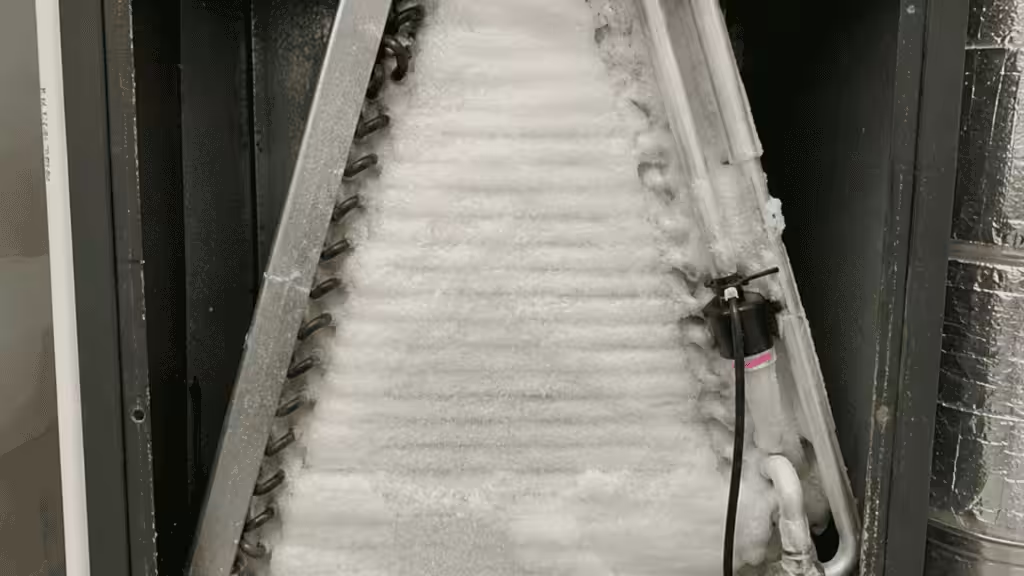
The indoor evaporator coil can freeze when it becomes too cold and condensation turns to ice. Restricted airflow, a dirty filter, blower problems, refrigerant issues, and dirty coils can all contribute.
Possible signs include:
- Ice on the copper refrigerant line
- Water around the indoor unit
- Weak or nonexistent airflow
- The AC running constantly
- The house getting warmer even though the system is on
Turn the cooling system off if you see ice. Do not chip, scrape, or attempt to break the ice away. That can damage the coil or refrigerant lines.
Check the filter while the system is off. Even if the ice eventually melts, the cause still needs to be corrected or the coil will likely freeze again.
Water from a thawing coil can also overflow the drain pan, so schedule service if you see ice or water around the equipment.
7. The Condensate Drain Is Clogged
Air conditioners remove moisture from indoor air as they cool. That moisture collects and exits through a condensate drain.
Algae, dust, sludge, or debris can clog the drain. Some systems have a safety switch that shuts down part or all of the cooling equipment when water backs up. This helps prevent water damage but can leave the blower running without active cooling.
Signs of a condensate problem include:
- Water around the indoor HVAC unit
- A full or overflowing drain pan
- A musty smell
- Water stains near the equipment
- The thermostat calling for cooling while the outdoor unit remains off
Do not ignore standing water around the system, especially when it is close to electrical equipment. Turn the system off and have the drain, pan, and safety switch inspected.
8. The System Has a Refrigerant Leak
Refrigerant does not get “used up” like gasoline. An air conditioner should not routinely need more refrigerant unless it has a leak or another problem.
Possible signs of a refrigerant issue include:
- The system runs for long periods without cooling
- Ice forms on the coil or refrigerant line
- The home feels increasingly humid
- You hear hissing or bubbling near the equipment
- Cooling performance has gradually declined
- The same system has needed refrigerant before
Refrigerant problems require professional testing and repair. Adding refrigerant without finding the leak may temporarily improve performance, but it does not correct the cause.
A technician should evaluate the system, locate the source of the leak when possible, explain the repair options, and confirm the correct refrigerant charge.
9. An Electrical or Mechanical Component Has Failed
An AC system relies on several electrical and mechanical components working together. A single failed part can leave the system running without producing enough cool air.
Possible failures include:
- Capacitor
- Contactor
- Condenser fan motor
- Indoor blower motor
- Compressor
- Control board
- Thermostat wiring
- Safety switch
Homeowners should not open electrical panels or attempt to test these parts. Capacitors and other HVAC components can retain dangerous electrical energy even after the equipment has been turned off.
A professional technician can test the components, identify the actual failure, and tell you whether a targeted repair makes sense.
Why Cookeville Humidity Can Make the Problem Feel Worse
During a humid Upper Cumberland summer, your AC has two jobs: lower the indoor temperature and remove moisture from the air.
When the system is not operating correctly, the thermostat may show a temperature that looks close to normal while the house still feels sticky and uncomfortable. High indoor humidity can make the air feel warmer and may point to:
- Short or interrupted cooling cycles
- Restricted airflow
- A dirty indoor coil
- Incorrect system sizing
- Refrigerant problems
- Leaky ductwork
- Equipment that can no longer keep up
Do not assume that lowering the thermostat further will solve the problem. If the AC already runs constantly, lowering the setting can make the system work harder without addressing the cause.
What You Can Safely Check Before Calling
Before scheduling AC repair, check these five things:
- Confirm the thermostat is set to Cool and the fan is on Auto.
- Inspect or replace a visibly dirty air filter.
- Open blocked or closed supply vents.
- Check the AC breaker once.
- Remove loose debris from around the outdoor unit without opening it.
These checks may correct a simple problem or give the technician useful information.
Stop troubleshooting and schedule service if you notice ice, water near electrical equipment, repeated breaker trips, unusual noises, burning smells, or an outdoor unit that will not start.
When Is an AC Problem an Emergency?
Call for urgent service when:
- You smell burning or see smoke
- The breaker repeatedly trips
- The system makes loud grinding, buzzing, or electrical noises
- Water is collecting near wiring or electrical components
- The outdoor unit is extremely hot or smoking
- The AC has failed during dangerous heat conditions
- A child, older adult, pet, or medically vulnerable person is at risk from the indoor temperature
If you see smoke or believe there is an immediate fire risk, leave the area and contact emergency services.
Putnam Maintenance provides 24/7 emergency HVAC service throughout Cookeville and the Upper Cumberland.
Do You Need an AC Repair or a New System?
An AC that is not cooling does not automatically need to be replaced. Many problems can be corrected by replacing a failed part, restoring airflow, cleaning the equipment, repairing a drain, or fixing a refrigerant leak.
Replacement may deserve consideration when:
- The system has a major compressor or coil failure
- It has required several recent repairs
- Replacement parts are unavailable or unusually expensive
- It cannot control temperature or humidity even after repairs
- The equipment is nearing the end of its useful service life
- The cost of repairing it no longer makes sense compared with replacing it
A trustworthy technician should diagnose the actual failure before recommending either option.
[Internal link: HVAC Installation and Replacement]
AC Still Running but Not Cooling? Call Putnam Maintenance
If you have checked the thermostat, filter, vents, breaker, and outdoor unit but your house is still getting warmer, it is time to have the system properly diagnosed.

Putnam Maintenance provides AC repair throughout Cookeville and the Upper Cumberland. Our local technicians service airflow problems, frozen coils, refrigerant leaks, drainage issues, electrical failures, and systems that simply cannot keep up with Tennessee heat and humidity.
You will receive a clear diagnosis and upfront price before repair work begins. Putnam Maintenance also offers 24/7 emergency service when the problem cannot wait.
Call (931) 559-7823 or schedule AC repair online.
Frequently Asked Questions
Why is my AC running but blowing warm air?
The thermostat may be set incorrectly, the outdoor unit may have lost power, or the system may have restricted airflow, a frozen coil, a refrigerant leak, or a failed component. Start by checking the thermostat, filter, vents, breaker, and outdoor unit. Schedule service if those checks do not correct the problem.
Can a dirty air filter stop an AC from cooling?
Yes. A heavily clogged filter can restrict airflow, reduce cooling performance, and contribute to ice forming on the indoor coil. Replace a visibly dirty filter with the correct size and type for your equipment.
Should I turn off my AC if it is not cooling?
Turn it off if you see ice, water near electrical equipment, smell burning, hear grinding or electrical noises, or experience repeated breaker trips. Continuing to run a malfunctioning system can cause additional damage. For a simple thermostat or filter issue, complete the safe checks first.
Why does my AC run all day without reaching the thermostat setting?
The system may be dealing with restricted airflow, dirty coils, duct leakage, refrigerant loss, equipment failure, high indoor humidity, or a cooling load it cannot handle. Extremely hot weather can increase run time, but the indoor temperature should not continue rising while a healthy system runs.
How can regular HVAC maintenance help?
Maintenance gives a technician an opportunity to inspect airflow, electrical components, coils, drainage, and system operation before a small issue causes a breakdown. Putnam Maintenance offers seasonal HVAC maintenance and whole-home plans for homeowners who want ongoing coverage.


